Why learning executive functions is more effective for ADHD brains
- Tanya Smith

- Dec 2, 2025
- 3 min read
When we watch TikTok or Instagram and see people listing ADHD traits, we often begin adopting those traits as our own. Not because we’re copying, but because ADHD is something we’ve lived with all our lives. It’s familiar. It’s us. So a lot of the time, we don’t even realise what is genuinely “ADHD” and what is simply learned behaviour, emotional patterns, or habits that formed over the years.
This is where neural pathway strengthening comes in.(You might hear it called neuroplasticity, but we’re keeping it simple.)
ADHD doesn’t remove your ability to grow;
it just means your development can be slower, more reactive, and shaped heavily by your environment and upbringing.
How do we change these pathways? And does it actually work?
First, we need to understand that ADHD symptoms come from deficits in the brain’s executive functions, which are located in the prefrontal cortex (PFC). These functions show up differently for every ADHD person because our lives, experiences and environments have all shaped our pathways in unique ways.
The executive functions include:
Self-awareness
Inhibition (self-control)
Verbal working memory
Non-verbal working memory
Planning and organising
Emotional regulation
Motivation
The PFC also plays a role in sensory processing, which is why ADHD can deeply affect how we respond to noises, lights, textures or movement in a room.
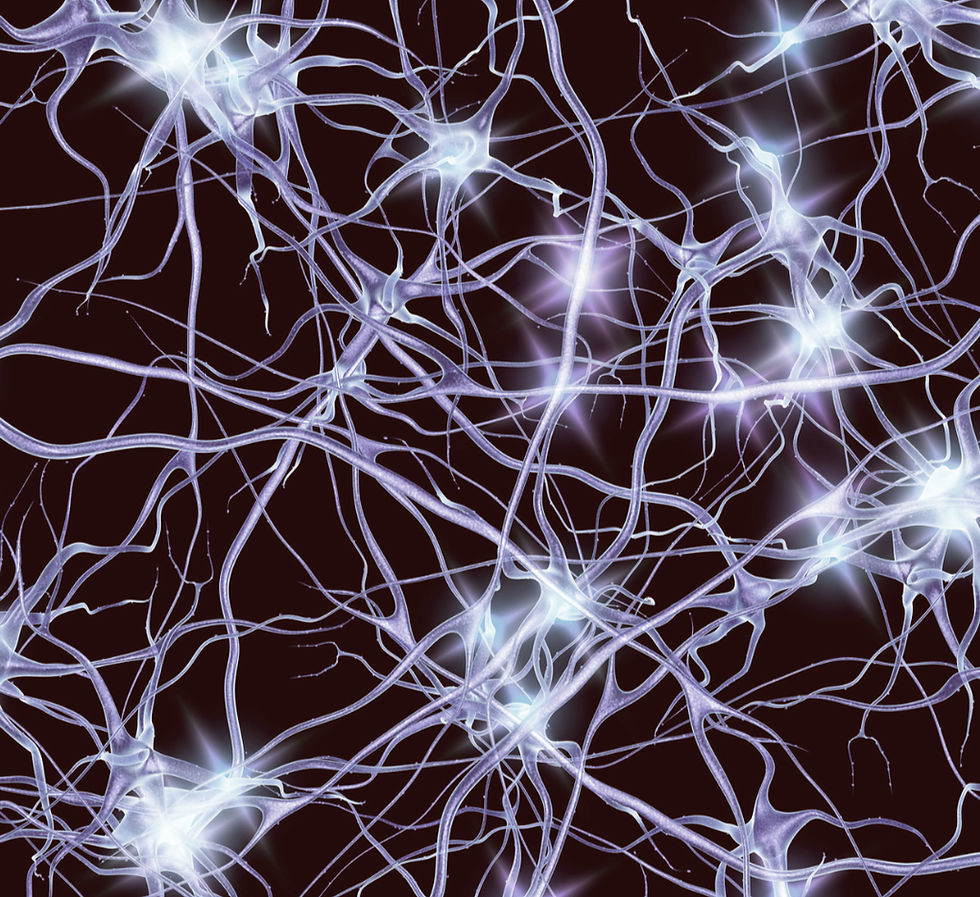
All these functions overlap and work together. When they’re struggling, it affects daily decision-making, relationships, emotions, productivity, and how we see ourselves.
How it works
ADHD brains have less volume in the prefrontal cortex, which means less activity, resulting in fewer connections. Also, because of the decrease in myelination, the signalling process is slower too. This doesn't mean that ADHD brains don't have plasticity, the ability to strengthen new pathways; it does, however, lack the motivation and the consistency.
Strengthen pathways takes these things to achieve and the belief that it will- because ADHD brains want results fast. Plasticity needs:
Repetition
Emotion
Relevance
So instead of forcing change through willpower (which ADHD does NOT respond to), we use:
Micro-Practices
Tiny repetitions that don’t overwhelm the brain. Use them in the smallest of confrontations or disagreements. Then they will start to grow- a bit like starting on the lowest weight at the gym.
The more you pull from the way your default wants you to go-see it as a rep- the more you are helping your brain. Also - like the gym- you won't see results with only going once, but you know that it works because there are many people with the 'perfect body'!!.
Practice this:-
When you have read something on social media that annoys you, don't engage- do something else and just say to yourself, 'leave it alone'.
You may feel like you want to say something, but it's only your amygdala and your adhd brain that wants to put it right, and in a world where there are very few situations where one person is completely right, you are wasting your time and strengthening your default pathway.
And like the gym, the only way it won't work is if you stop doing it.
How does this help with the ADHD brain?
This repetition can enable your brain to stop engaging as much on default as it used to. So, when you have a teen pressing buttons or a husband's remark, your brain may become subconsciously slower at the response, giving you time to think.
So, as you can see, this can positively affect many areas of your life with just a few practices.
Have a go and email me what you think?
Until next week, take care,
Tanya


Comments